


When I tell people back home that I’m raising four kids in Colombia, the reaction is almost always the same.
A pause. A polite smile. Then some version of:
“Wow. How’s that going?”
What they really mean is:
“You sound completely insane.”
And to be fair, I get it.
Most foreigners see Colombia as a cool place to visit for a bit of sun and adventure, some IG friendly content and a few good stories to share around the dinner table when they get back home.
But as a serious place to put down roots? To get married, raise children, and build an actual life?
That’s still not how most Westerners think about Colombia at all.
I didn’t either.
When I landed in Bogotá in 2015 with little more than a suitcase and a laptop, I wasn’t thinking about family life. I wasn’t thinking about schools, long-term stability, or where I might one day raise children. Like a lot of foreigners, I just came for the vibes and some fun in a different culture.
I never expected in a million years to end up living out here full-time and be settled down with a wife and kids.
But after more than 10 years, I’ve learned that the real value of Colombia isn’t in the tacky touristy stuff. It’s not about paragliding over Piedra del Peñol or buying a wooden Willy’s Jeep in a souvenir shop in Salento.
What makes Colombia special is what it offers people who want to build a life on their own terms.
And for me, that means time & financial freedom, marriage, fatherhood, and raising a family.
If it hadn’t happened almost entirely by accident, I’d say moving here and having children in Colombia was one of the best decisions I ever made.
Unfortunately, I can’t pretend like I had the foresight to know it’d turn out like this, because this was never in my plans. One of these days I’ll write up the full story of how I ended up here, it’s pretty wild!
But for now, what I’ve discovered after more than 10 years living out here is that despite Colombia’s reputation, raising a family out here in my opinion is one of the best decisions you could ever make.
Here’s why…
The money changes more than your lifestyle
Let’s get the obvious point out of the way first, because everybody asks about it and it underpins almost everything else.
If you earn in dollars or pounds and spend in pesos, the difference in purchasing power is hard to overstate.
And I don’t just mean you can buy cheap beer or get a coffee for under a dollar.
I mean your whole standard of living shifts several notches upwards as soon as you step off the plane.
Coming to Colombia with dollars in your pocket is like stepping through a wormhole into a parallel universe where you’re instantly four times richer, smarter, and more handsome than you were before.
Your money goes further.
Your social circle increases in quality.
And as a result doors open to you that simply wouldn’t be available back home.
In a western city like London, $1000 a month rent will get you a tiny bedsit or a box room in a shared house in a crummy part of town. The type of living situation where your life is at risk each time you step outside after dark and you can’t even imagine having a pet gerbil, let alone an entire family of children.
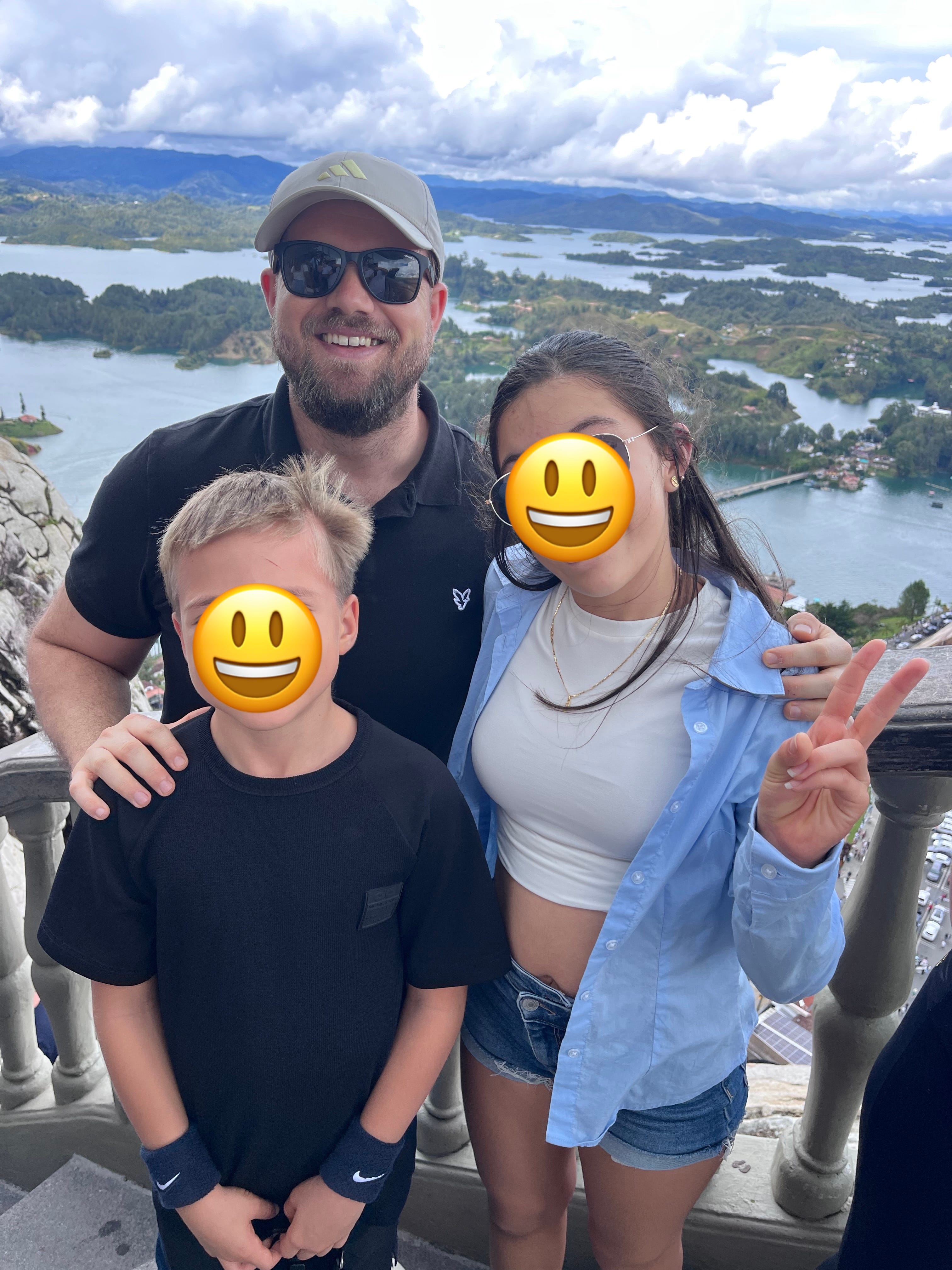
That same money in Medellín gets my wife and I a beautiful 3 bedroom apartment with a breathtaking view in a gated community. The community has a pool, a gym, a football pitch, a basketball court, tennis courts and squash courts, a jacuzzi, sauna, a private café/restaurant, a private parking space and storage room, and a park where my kids play every afternoon.
We have a maid who helps my wife with the housework. We have private healthcare for the whole family and my kids study at excellent private online schools.
We’re not rich by any stretch in the financial sense, but I consider us to be rich beyond our wildest dreams because of the lifestyle and freedom that Colombia offers.
And here’s the real life changer.
When you live in an economy like Colombia, where your dollar stretches so much further than before, there is a knock on effect that I must admit, took me a while to notice.
Because when the financial pressure drops, you become a different kind of parent.
You’re less stressed. Less distracted. You stop doing mental arithmetic in the supermarket to figure out what you can afford this week.
You may not have a huge amount of money, but that isn’t what really matters.
Kids don’t need a lot of stuff, but what they really do need, is you.
They need time, attention, stability, and parents who don’t hate each other and aren’t permanently fried from working every hour of the day.
And in Colombia, where you can easily make ends meet with even a part-time remote job, that’s exactly what you’re able to give them.
But this isn’t even close to the best thing about raising a family in Colombia, because the real benefit isn’t material or financial at all. It’s something entirely different.
Your kids can actually have a childhood here
Now I know what you’re thinking.
“Yes DJ, earning enough money to live a very comfortable lifestyle improves your family life… we already knew that. And you can do that anywhere if you earn enough, it’s not unique to Colombia!”
I hear you, and you’re right, that’s why I would never say Colombia is the best place to raise a family based on money and finance alone.
It’s a combination of factors, but here’s where I think family life in Colombia really does stand head and shoulders above many other places in the world…
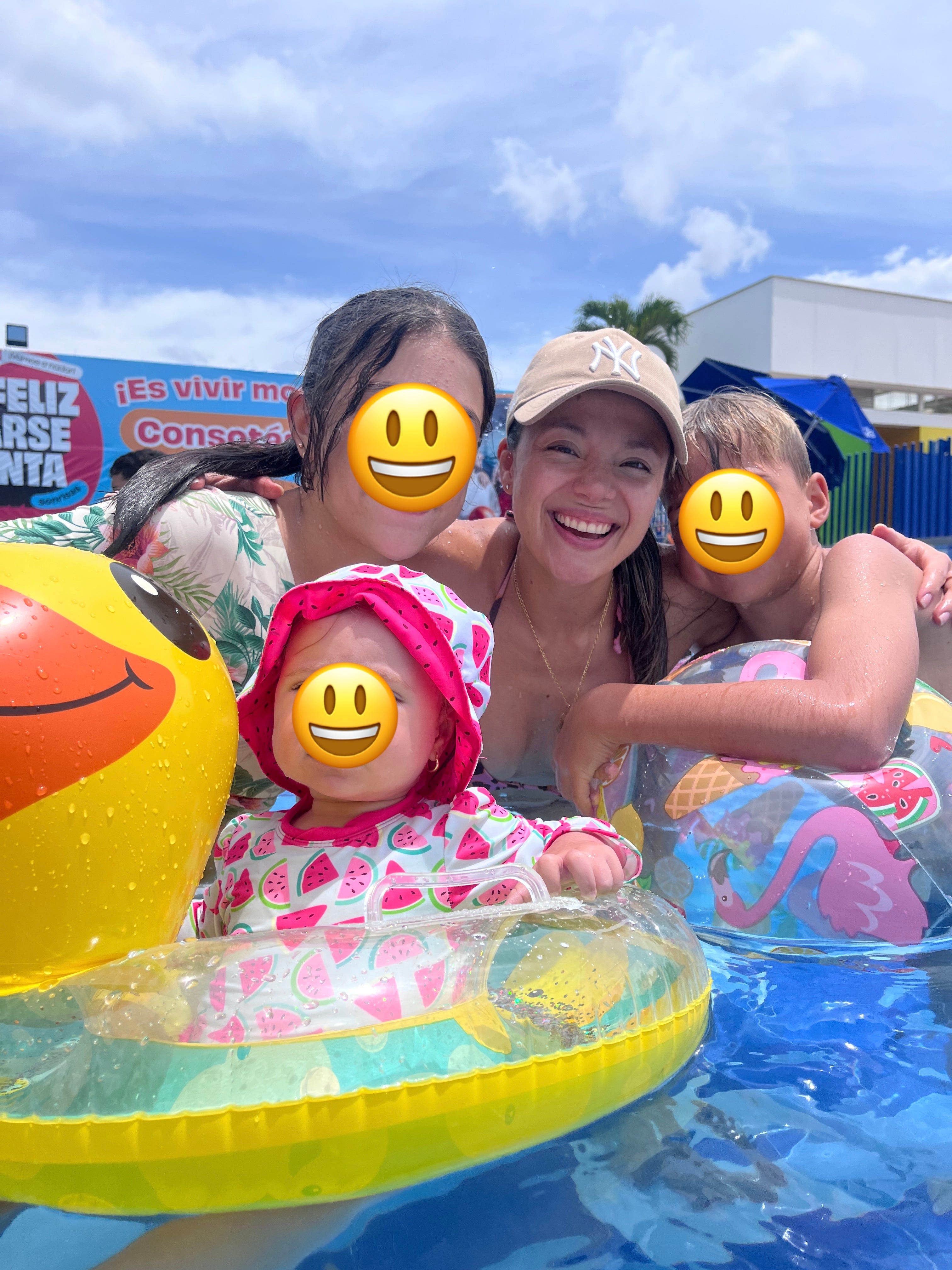
In Colombia, many middle-class families live in what’s called a conjunto cerrado — a gated residential community with security, shared outdoor space, playgrounds, sports areas, and lots of other families living together in the same community.
They vary in size and quality. Some are fairly modest, and some feel like living in a permanent holiday resort. But the principle is always the same… your kids walk out the front door into a safe, enclosed neighbourhood full of other kids.
I can’t stress enough what a gamechanger this is.
Yes, the homicide rates in most European or US cities may be *statistically* lower... but that doesn’t equate to a higher quality of life unless your kids can actually *experience a childhood where they can play outside safely.*
Here in Colombia, conjuntos cerrados are the ultimate unlock for a childhood that many people assume is a long gone memory from the past.
Picture this…
My son Santiago is nine years old.
On a normal day, he disappears after lunch and spends most of the afternoon outside with his friends.
He rides his BMX around.
He plays football on the pitch.
He runs around on the grass, climbs trees, collects sticks and looks at weird bugs in the dirt.
Santi will often come back home at sundown, drenched in sweat with scraped knees and muddy grass stains all over him.
And I wouldn’t have it any other way.
That’s what childhood was like when I was growing up, and if you ask me that’s how all childhoods should be.
Not sitting indoors glued to a screen for hours at a time, or being shuttled from one sanitised enrichment activity to another.
Just a normal, healthy childhood.
I didn’t move to Colombia for this. I didn’t even know it was an option to be honest.
But now that I’ve experienced it, it’s one of the biggest reasons I can’t imagine going back.
Now as I sit here writing this, I feel truly blessed. Believe it or not, I’m actually writing this from a hospital cafeteria sipping coffee and waiting for the nurses to take my wife upstairs to the maternity ward.
We’re about to welcome our fourth child into the family.
As a father, there are few things more satisfying than knowing the children you bring into the world will be able to go outside, play safely and have a healthy childhood.
Knowing my kids will grow up being able to make friends naturally, develop independence, and enjoy the kind of freedom that much of the modern world seems to have quietly decided children no longer need…
That alone is worth more to me than almost anything else.

Family life is still valued here
They say that when you marry a Colombiana, you marry her entire family.
And as a husband to a Colombian wife, I can say that this description is pretty accurate.
Families in Colombia stick together. It’s one of the things I appreciate most about the culture.
The reasons are varied, and one aspect of this is economic.
Families tend to pool their resources together in order to more easily create shared wealth within the family.
Many Colombians will continue to live together with parents, grandparents and great-grandparents well into adulthood — and often for life.
My wife’s family, for example, owns a very modest three storey building with an apartment on each floor, and different members of the same family live in each of the apartments.
The building has been owned by the family for generations, and different members of the family have all lived there at different times.
I don’t even think anyone even knows whose name is on the deed anymore, nor does it matter because they’d never sell it.
It’s the family home, and it belongs to the entire family.
Nobody’s paying rent. Nobody’s starting from zero. The family unit is the wealth-building engine, not the individual.
So economic necessity is one aspect. But that isn’t the entire story, the importance of family in Colombia can also be traced directly back to the Catholic faith that still unites this country, despite the creeping cancerous influence of secularism.
Although devout adherence to Church teaching in Colombia continues to fall, Colombia is still very much a Catholic nation, and Catholicism is intrinsic to Colombia’s history, culture and national identity.
The traditional Catholic values that place family at the center of society are still commonly held here, and for me as a convert to Catholicism, this is one of the most beautiful aspects of life here and one of the reasons why I think Colombia is a great place to raise a family.
It means my kids aren’t being raised in a silo where seeing family members is a rare and awkward moment that only occurs on special occasions.
It means my kids don’t grow up embarrassed to tell their friends they believe in God and go to church.
It means my wife can give birth in a Catholic hospital that comes equipped with a Catholic chapel where Mass is celebrated on Sundays, and where the nurses aren’t pushing contraception or sterilization on her as soon as our baby leaves her womb.
Living and raise children in a Catholic culture, where good, true and beautiful values are still widely held, in my opinion is a great blessing, and one of the reasons why Colombia is one of the best places on earth to raise a family.
Colombia isn’t perfect — but it gives us what matters most
I’m not trying to pretend Colombia is paradise.
It isn’t.
It has corruption, inequality, dysfunction, security issues, and plenty of reasons to drive you mad. Any honest person who lives here long enough will tell you that.
But the longer I stay, the more convinced I become that a lot of people in the West are completely missing the point.
They assume that raising a family well is mostly about choosing a richer country, a tidier country, or a country with better branding.
But a good family life usually comes down to something much simpler.
Can you afford enough space?
Can your kids play outside?
Can you spend real time together without being crushed by financial pressure every waking hour?
Are your kids raised in a culture that promotes virtue?
For us, Colombia has, despite her shortcomings, answered yes to those questions much more reliably than most alternatives in Europe or the US.
That is why, despite all the obvious imperfections, I genuinely believe this has been one of the best places in the world for us to build our life.
Not because it’s trendy.
Not because it’s exotic.
Not because it gives you cool holiday photos that look great on Instagram.
But because it has allowed us to live as a family in a way that feels healthier, freer, and more human.
And in a world where that is becoming increasingly rare, I don’t take that for granted.